Schools in 2026 are preparing students for a world shaped by AI, digital collaboration, rapid change, and new expectations around adaptability. Academic achievement still matters, but it now sits alongside digital fluency, creativity, communication, and problem solving. That is why the world’s most innovative schools are attracting so much attention.
The most innovative schools in the world are not defined by technology alone. They combine strong teaching, thoughtful learning design, flexible spaces, and the right digital tools to create more engaging and relevant educational experiences. Many use project-based learning, collaborative environments, device programs, and student-centered instruction to help learners build skills they will carry into higher education, work, and everyday life.
For school leaders, district teams, and educators, these schools offer more than inspiration. They show how modern learning environments can support better engagement, greater flexibility, and stronger readiness for the future. The examples below highlight seven schools taking distinctly different approaches to educational innovation while proving that meaningful change can be both creative and practical.
What is an innovative school?
An innovative school is a school that intentionally designs learning around student needs, future relevance, and effective teaching practice. That can include technology integration, interdisciplinary curriculum, flexible classroom design, real-world learning experiences, and stronger student ownership of the learning process.
The strongest innovative schools examples do not pursue novelty for its own sake. They create systems that help students engage more deeply, help teachers deliver instruction more effectively, and help schools adapt to changing academic and operational demands. In that sense, innovation is as much about purpose and execution as it is about new ideas.
Why innovative schools matter
Innovation in education matters because the demands on schools have changed. Students are expected to think critically, work collaboratively, communicate clearly, and navigate digital environments with confidence. At the same time, educators are being asked to personalize learning, make better use of technology, and prepare students for a world that continues to evolve.
That makes innovative education models increasingly important across K–12, higher education, and vocational settings. The schools leading this shift tend to share a few common traits: student-centered learning, purposeful technology integration, collaborative spaces, real-world problem solving, and flexible teaching models. These features help schools respond to changing expectations without losing sight of strong educational foundations.
Key characteristics of the most innovative schools
The most innovative schools often share these characteristics:
-
Strong integration of digital technology into everyday learning
-
Flexible classroom design that supports movement, collaboration, and choice
-
Student-centered teaching approaches that build ownership and agency
-
Interdisciplinary curriculum connected to real-world issues
-
Learning experiences that emphasize communication, creativity, and problem solving
Together, these qualities create modern learning environments that are better aligned with how students learn today and how schools need to operate tomorrow.
7 most innovative schools in the world
There is no single formula for educational innovation. Some schools redesign curriculum. Others rethink physical space, adopt immersive technologies, or build stronger systems for personalized learning. These seven examples show how different institutions are moving education forward in ways that are both ambitious and practical.
1. De Verwondering, Lent, Nijmegen, Netherlands: Nurturing future leaders
The foundation of the De VerWondering educational approach is based on its name, which translates to “a sense of wonder.” This school wants students to learn by trying, experimenting, researching and asking questions. Skills such as problem-solving, social skills, collaboration, creativity, communication, information and communication technology (ICT) literacy and lifelong learning are given the same importance as reading and math.
An Ashoka Changemaker school, it has been identified for a strong focus on the possibilities that technological advancements in the classroom have to offer.
“Students at De Verwondering learn by means of their personalized learning tracks and develop their social and emotional skills through value-based curricula and a strong sense of community. This school nurtures future leaders who will not only be able to manage themselves in an ever-changing world, but will do so with empathy."
2. Frenship Independent School District (ISD), Texas, United States: Setting students up for success
Frenship ISD’s mission is to educate and develop all students by providing a foundation to empower them to reach their maximum potential and realize their opportunity of choice. The district is known for putting students first, allowing them to reach their potential. Never has that been more true than during the COVID-19 crisis.
Regardless of what the future holds in terms of accommodating remote learning, in-person classes when schools reopen or a blended learning model of the two, Frenship is ready.
- The Frenship ISD Technology Department has set up WiFi hotspot locations at different campuses for students without internet access. Students and staff can drive to a campus parking lot, stay in their vehicle, and connect to the WiFi, using their Frenship logins for faster internet connection.
- The district wisely invested in multiple FUYL Smart Lockers. These smart lockers pivot quickly and easily to support Break/Fix, Loaner Devices and On-Demand Charging for student and teacher devices regardless of the learning scenario.
Frenship ISD’s smart locker setup shows how scalable charging infrastructure supports hybrid and flexible learning. If you’re exploring similar solutions, our guide on smart locker pricing breaks down what impacts cost and how to budget effectively.
3. The Green School, Bali: Thriving with purpose
Voted the Greenest School on Earth by the Centre for Green Schools, the Green School is a model for sustainability and a center for experimentation, innovation and solutions. Instead of seeing nature as a distraction, educators at this school believe that a constant connection to the environment has a positive effect on problem-solving and intelligence.
A ‘living’ curriculum educates for sustainability through community-integrated, entrepreneurial learning, in a wall-less natural environment.
“We strive to champion a new model of education that nurtures the whole child, giving them agency in their own lives and learning, so that they can thrive with purpose.”
4. I.S.S. Ettore Majorana, Brindisi, Italy: Early Lessons in Streaming
This institute has distinguished itself for its dedication to change and digitalization, for inventive teaching methods, and creativity. The classes disposed of student’s chairs. In their place are mobile desks and a flexible, dynamic and collaborative learning environment.
As the first school to use the Oculus Rift virtual reality system, Majorana has put modern ideas and technology at the center of education. The school was also ahead of time in delivering lessons via streaming. According to Studenti, long before the recent lockdowns, students have been able to follow lessons in real-time from home.
“But, if they wanted, they could also follow them in streaming, since the teachers record the video lessons and they attach them to virtual classes.”
5. The London Interdisciplinary School (LIS), London, England: Working across different disciplines
LIS dispels with the common idea of single-subject study at university. Instead, students learn how to combine knowledge through different disciplines to find solutions to real-world challenges and problems.
“Learning doesn’t fit into neat little boxes — and neither does life,” argues school co-founder Ed Fidoe. “The world is more connected and complex than it’s ever been and it requires people to think in systems rather than narrow silos.”
This interdisciplinary program investigates shared problems with new ways of thinking and understanding. At LIS, students graduate feeling empowered to go out in the world and make an impact. Study is done through the lens of tackling problems such as malaria, childhood obesity, and the knife crime epidemic.
6. Summit Public Schools, Western United States:
Getting personal to teach self-reliance
Founded in 2003, teachers at this network of public schools guide students through a self-directed learning cycle, using and technology to empower students to map their own journey.
“At Summit, students unlock the power within themselves to gain the knowledge, habits, and skills to successfully navigate college and careers.”
Educators at Summit Schools believe that every child is capable of college and career success, and focuses on real-world projects. The results speak for themselves with a 98% acceptance rate into a 4-year college and 2x the national average for college graduation.
Summit shows how EdTech and mobile devices in schools can support personalized, student-driven learning. Their model proves that innovation doesn't require huge budgets — just smart systems that support student growth.
Cut device downtime. Save time and money.
See how with our free calculator.
7. TAFE SA, South Australia: Transforming vocational education with VR
One of the largest vocational education and training provider in Australia, with over 70,000 enrolled students and 34 campuses. TAFE SA is one of the leaders in Australia for its trade department.
TAFE SA recently deployed virtual reality headsets to aid education for their Air Conditioning and Refrigeration Servicing Courses. Students have a 1:1 approach with VR headsets that allows them to explore and experience high-risk areas they would not ordinarily see as apprentices.
TAFE’s use of VR is not only transforming vocational learning but also showcasing how flexible, tech-powered education can reach remote learners without sacrificing safety or quality. These are true examples of innovation in schools.
What these innovative schools do differently
| School | Primary innovation focus | What stands out |
|
De Verwondering |
Curiosity-led learning |
Balances academics with creativity, collaboration, and digital literacy |
|
Frenship ISD |
Access and device readiness |
Connects infrastructure, connectivity, and student support |
|
Green School Bali |
Sustainability-led education |
Uses environment and community as part of the curriculum |
|
I.S.S. Ettore Majorana |
Flexible digital learning |
Early use of streaming, VR, and adaptable classroom design |
|
London Interdisciplinary School |
Interdisciplinary curriculum |
Organizes learning around complex real-world problems |
|
Summit Public Schools |
Personalized learning |
Builds self-direction, mentorship, and student ownership |
|
TAFE SA |
Immersive vocational training |
Uses VR to support technical education and safer skills practice |
What can we learn from the most innovative schools in the world?
These schools prove that innovation comes in many forms — from interdisciplinary study to real-time device access. Whether you're investing in EdTech, launching a mobile device program, or rethinking how students learn outside the classroom, one thing is clear: infrastructure matters. Reliable, energy-efficient charging solutions and smart storage systems enable schools to scale innovation while reducing IT overhead.
Why device management matters for innovative schools
Conversations about innovative school ideas often focus on curriculum, teaching models, or classroom design. Those factors matter, but so do the operational systems behind them. A school can invest in 1:1 learning, collaborative spaces, and digital instruction, yet still face disruption if devices are uncharged, unsecured, unavailable, or difficult to exchange when problems arise.
That is why device management is part of school innovation. Charging, device security, and classroom readiness all influence whether teachers can begin lessons on time and whether students can participate fully. Reliable access is not a secondary concern. It is part of what makes modern digital learning work.
For IT leaders, the practical questions are straightforward. Are devices ready at the start of the day? Can damaged units be swapped quickly? Is there a clear chain of accountability as equipment moves between students, classrooms, and campuses? When those details are overlooked, instructional time is lost and support teams take on unnecessary manual work.
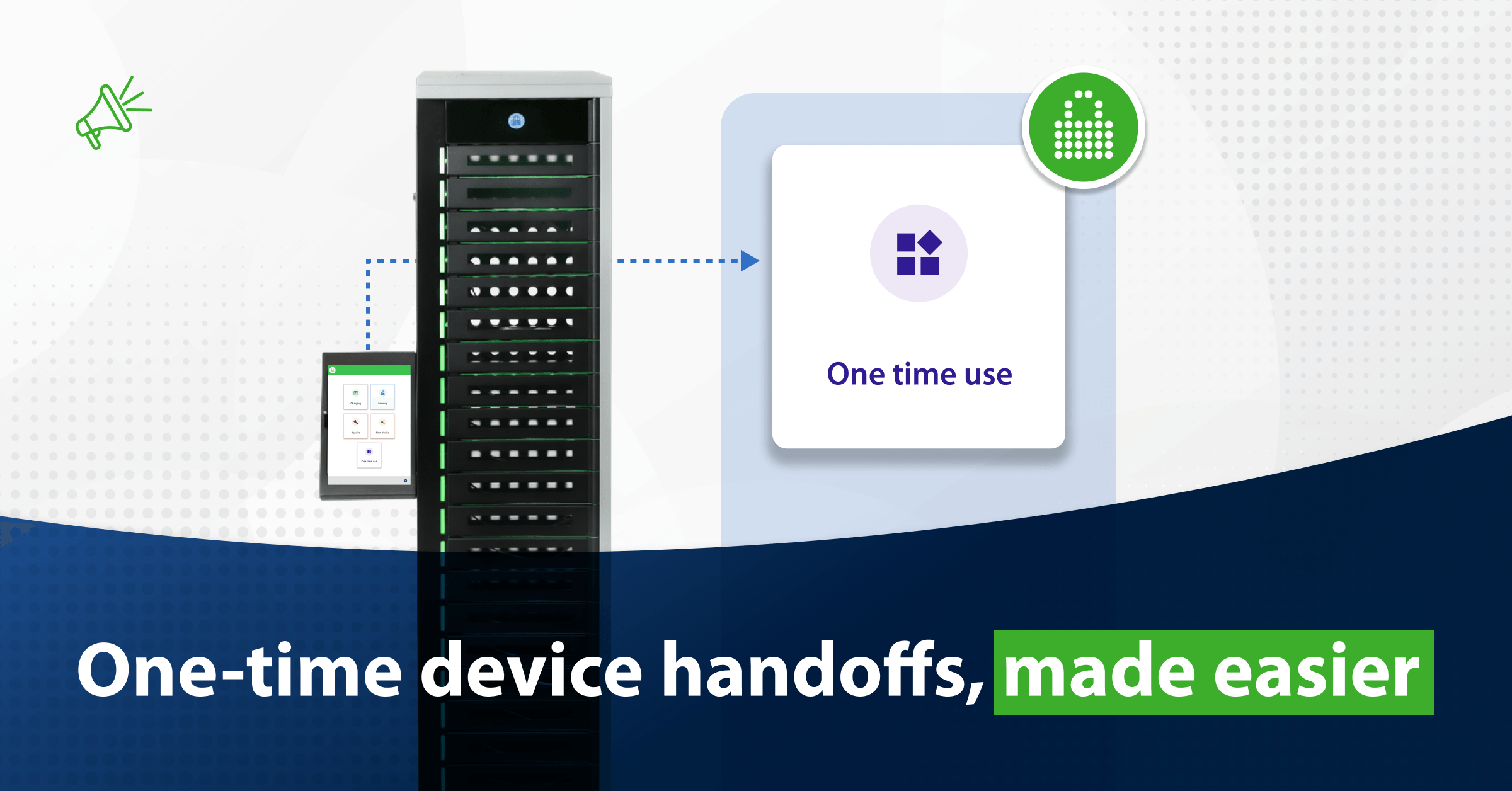
This is where LocknCharge can support innovative schools in practical, non-disruptive ways. Solutions such as FUYL Smart Lockers help schools manage secure storage, charging, and self-serve device access more efficiently. That can reduce downtime, simplify handoffs, and support learning continuity without requiring IT teams to manually manage every transaction.
As digital programs expand, schools also need infrastructure that supports scale. Planning around storage, charging, and deployment becomes even more important when districts are rethinking technology in the classroom or building broader 1:1 strategies. Operational readiness is often the difference between a promising initiative and one that works consistently across the school day.
Schools reviewing their wider device strategy may also benefit from practical guidance on future trends in education, especially as digital access and flexible learning continue to shape planning decisions.
The future of innovative schools
The future of schools will likely be shaped by AI, hybrid learning, global digital collaboration, and more immersive educational experiences. These developments are already influencing how institutions think about teaching, assessment, student support, and long-term planning.
AI in education is changing how content is generated, how feedback is delivered, and how learning pathways can be adapted for different students. Hybrid learning continues to shape expectations around flexibility and continuity. Global digital classrooms are making collaboration less dependent on geography, while immersive tools such as AR and VR are opening new possibilities for simulation, practice, and engagement.
The schools that respond well will not be the ones that adopt every trend at once. They will be the ones that make thoughtful decisions based on learning goals, staff capacity, and infrastructure readiness. They will also understand that educational innovation depends on systems as much as ideas.
For a wider view of where the sector is heading, explore these perspectives on EdTech trends. Looking at the bigger picture can help school leaders connect classroom innovation with the technology, support, and planning required to sustain it.
Key takeaways
The most innovative schools in the world do not all follow the same model. Some are built around sustainability. Some focus on personalized learning. Others stand out through interdisciplinary curriculum, digital flexibility, or immersive vocational training. What they share is a willingness to align pedagogy, technology, and learning environment design around student needs and future relevance.
That is the defining lesson from these examples. Innovation in education is not about adding new tools for appearance alone. It is about creating learning experiences that are more engaging, more practical, and better suited to the realities students will face beyond school.
For district leaders, administrators, and educators, the opportunity is clear. Strong teaching models need dependable systems behind them. When schools pair creative educational thinking with secure charging, device access, and classroom readiness, they are far better positioned to build learning environments that support both students and staff over the long term.