Replacing student devices costs K-12 schools anywhere from about $15 for a charger to roughly $1,000 for a full Windows laptop replacement, depending on the device, the damage, and the district’s fee schedule. Chromebooks often cost $200 to $500 to replace, while iPad replacement cost in K-12 can range from about $316 to $800. Beyond the hardware itself, schools also absorb IT labor, device downtime, and loaner program overhead.
A student cracks a Chromebook screen between classes. An iPad slips off a desk. A laptop never makes it back after a break. Here’s what you’ll typically be charged, how school insurance plans work, and what school device replacement costs really look like for K-12 IT teams.
If you’re wondering what happens if you break a school computer, the answer depends on the device, the damage, and your district’s policy.
What happens if you break a school computer?
Most schools follow a similar process. The student reports the damage, IT staff inspects the device, and the district determines whether the issue is accidental damage, negligence, intentional damage, loss, or theft.
In many districts, accidental damage leads to a repair fee or an insurance claim. Intentional damage often results in the full hardware replacement cost. Lost devices are commonly billed at full replacement cost, and theft claims often require a police report before fees are reduced or waived.
That pattern appears across public district policies. Upper St. Clair School District publishes model-specific lost device fees, while Madison County Schools states that families may be charged for lost, stolen, or irresponsibly damaged devices.
Many schools also offer optional coverage for accidental damage. Public examples from Verona Area School District, Freeport Area School District, and White River School District show annual insurance or protection fees ranging from about $20 to $75 per device, which can substantially reduce the cost to replace student devices after a broken screen, missing charger, or repeated repair incident.
How much does it cost if you break a school Chromebook, iPad, or laptop?
The table below gives families and school staff a practical benchmark based on publicly available district fee schedules.
|
Device |
Typical repair cost |
Typical replacement cost |
|
Chromebook |
$35-$200+ |
$200-$500.74 |
|
iPad |
$40-$200 |
$316-$800 |
|
Windows laptop |
$170-$670 |
~$1,000 |
These are typical ranges compiled from publicly available district fee schedules. Your district’s actual fees may vary, so check with your school’s IT department.
Real examples show how wide the range can be:
-
Prince George’s County Public Schools lists Chromebook damage tiers from $35 to $100
-
Downingtown Area School District lists a Chromebook touchscreen at $170 and a system board at $200.
-
Mayfield City Schools lists a full Chromebook replacement at $263
-
Ontario-Montclair School District lists a Lenovo 500e Yoga Chromebook replacement at $500.74
On the tablet side, iPad replacement cost in K-12 can be much lower for standard devices than for premium models:
-
Verona Area School District lists full iPad replacement at $316
-
Ontario-Montclair School District lists a 10.2-inch iPad at $327.17, and
-
Prince George’s County Public Schools lists iPad Pro replacement at $800
For students and parents, the section above covers what you’ll typically owe. For K-12 IT directors and school administrators, the rest of this article covers what device damage and replacement actually costs a district — and how to reduce it.
How much do student device repairs cost K-12 schools?
Below is a fuller pricing comparison built from public district schedules.
|
Device |
Damage type |
Estimated cost |
Source District |
|
Chromebook (HP) |
Full replacement |
$293.77 |
Ontario-Montclair School District |
|
Chromebook (Lenovo 500e Yoga) |
Full replacement |
$500.74 |
Ontario-Montclair School District |
|
Chromebook |
Full replacement |
$263 |
Mayfield City Schools |
|
Chromebook |
Lost device |
$355-$385 |
Upper St. Clair School District |
|
Chromebook |
Full replacement |
$300 |
Verona Area School District |
|
Chromebook |
Full replacement |
$200 |
Prince George’s County Public Schools |
|
Chromebook |
Touchscreen |
$170 |
Downingtown Area School District |
|
Chromebook |
System board |
$200 |
Downingtown Area School District |
|
Chromebook |
Screen |
$89 |
Mayfield City Schools |
|
Chromebook |
Keyboard |
$79 |
Mayfield City Schools |
|
Chromebook |
Battery |
$79-$89 |
Mayfield City Schools / Upper St. Clair School District |
|
Chromebook |
Motherboard |
$119 |
Mayfield City Schools / Upper St. Clair School District |
|
Chromebook |
LCD |
$60-$140 |
Ontario-Montclair School District |
|
Chromebook charger |
Replacement |
$15 |
Ontario-Montclair School District |
|
iPad |
Full replacement |
$316 |
Verona Area School District |
|
iPad (10.2-inch) |
Full replacement |
$327.17 |
Ontario-Montclair School District |
|
iPad |
Full replacement |
$200 |
Prince George’s County Public Schools |
|
iPad Pro |
Full replacement |
$800 |
Prince George’s County Public Schools |
|
iPad |
Screen repair |
$90 |
Verona Area School District |
|
iPad |
Screen damage with AppleCare+ |
$40 |
Prince George’s County Public Schools |
|
iPad |
Non-warranty screen damage |
$200 |
Prince George’s County Public Schools |
|
iPad charger |
Replacement |
$38 |
Ontario-Montclair School District |
|
Windows laptop |
Full replacement |
~$1,000 |
Downingtown Area School District |
|
Windows laptop |
Touchscreen |
$360 |
Downingtown Area School District |
|
Windows laptop |
System board |
$670 |
Downingtown Area School District |
*Data sourced from publicly available K-12 district fee schedules, 2024-2025 school year.
Device repair & replacement cost summary table
For school technology replacement budget planning, the key issue is not just average cost. It is understanding where the cost spikes happen.
|
Device |
Damage type |
Estimated cost |
Source |
|
Chromebook |
Charger, keys, bezel, basic damage |
$15-$35 |
OMSD / PGCPS |
|
Chromebook |
Screen, keyboard, battery |
$60-$170 |
OMSD / Mayfield / Downingtown / Upper St. Clair |
|
Chromebook |
Motherboard, system board, major damage |
$100-$200 |
Mayfield / PGCPS / Downingtown / Upper St. Clair |
|
Chromebook |
Full replacement |
$200-$500.74 |
PGCPS / Mayfield / Verona / OMSD |
|
iPad |
Screen damage |
$40-$200 |
PGCPS / Verona |
|
iPad |
Full replacement |
$316-$800 |
Verona / OMSD / PGCPS |
|
Windows laptop |
Major component repair |
$360-$670 |
Downingtown |
|
Windows laptop |
Full replacement |
~$1,000 |
Downingtown |
*Costs vary by district, model, and school year. Data sourced from publicly available K-12 district fee schedules.
Chromebook repair cost for schools is usually manageable at the individual incident level, but replacing student devices becomes much more expensive when the district is supporting a broad 1:1 device program across multiple schools, multiple models, and recurring break/fix cycles.
The true cost of student device repair in schools
Hardware is only part of the picture. The true student device replacement cost for a district also includes intake, troubleshooting, documentation, family communication, loaner preparation, asset tracking, and getting a working device back into a student’s hands.
A practical planning model for K-12 IT teams is this: IT labor of roughly $75 to $150 per hour, about one hour of total handling time per device exchange, and about five exchanges per week. That adds up to roughly $25,000 per year in labor tied to manual device swaps and repair workflows.
Many districts also operate with the reality that about 20% of devices will break or go missing during the year. Even when student device damage fees offset some hardware costs, the district still pays in staff time and service interruptions.
In K-12, device downtime means more than lost productivity. It means missed classwork, slower access to digital curriculum, delayed assessments, and more friction for teachers trying to keep instruction moving. That is why K–12 mobile device repair is an operations issue as much as a repair issue.
How K-12 schools manage device protection costs
Most districts use one of two approaches.
The first is self-insurance, where the district absorbs most break/fix costs and charges families only in certain cases, such as negligence, repeated incidents, or loss. The second is a family-paid protection plan that creates more predictable coverage for accidental damage.
Public district examples show how varied these plans can be:
-
Verona Area School District limits family liability to $100 per incident for iPads and $60 for Chromebooks.
-
Schuylkill Haven Area School District charges $30 per device for annual coverage with stepped deductibles after the first two claims.
-
Freeport Area School District charges $25 before the deadline or $75 after, with a $0 first-incident deductible and $200 for lost or stolen devices.
-
White River School District publishes a $20 Chromebook protection plan, and Fox Chapel Area School District uses a $30 annual technology fee with the first repair covered.
For families, these plans can be the difference between a modest annual fee and a full hardware replacement bill. For schools, they help make school laptop repair cost, Chromebook repair cost for schools, and broader hardware replacement cost more predictable.
Districts also need to look at protection plans alongside broader K-12 device management solutions, especially when support demand is spread across multiple campuses.
How to reduce student device replacement costs
Some costs are unavoidable, but districts can dramatically reduce IT time and loaner complexity with the right systems.
One major cost driver is the manual device exchange. When every damaged device requires an in-person handoff, a staff member has to stop what they are doing, issue a replacement, record the transaction, and follow up later. That is one reason loaner laptop management becomes so time-consuming in K-12 environments.
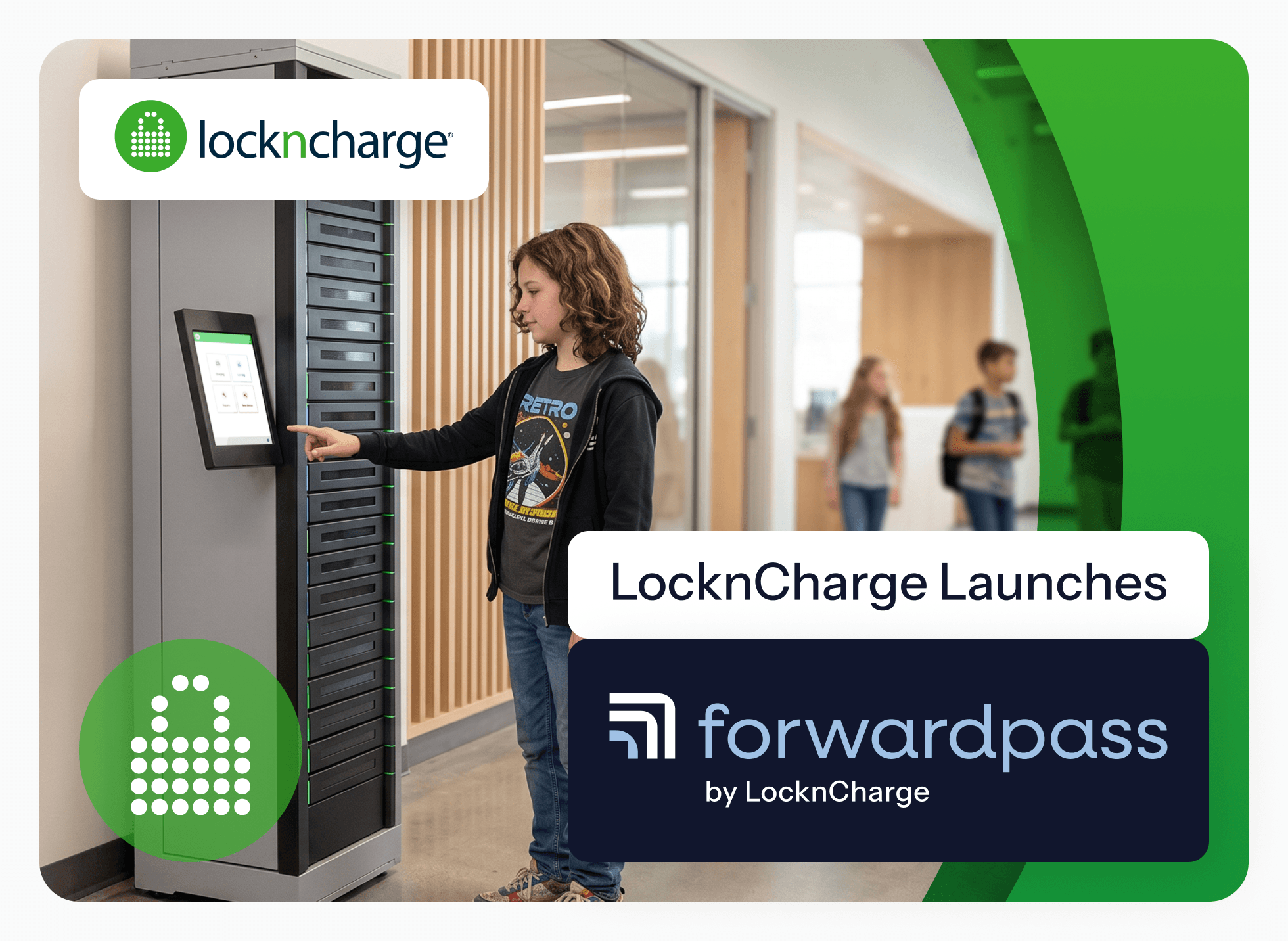
A smart locker system can reduce that burden. Smart locker systems like LocknCharge allow students to self-serve a replacement device in under 2 minutes without direct IT staff involvement, which helps schools reduce downtime and keep students connected to learning.
That labor reduction matters. If a district is spending around $25,000 per year on manual exchanges, reducing those exchanges by even 50% could save more than $12,000 annually while also simplifying the student experience.
That is especially relevant for districts building a student device loaner program or solving common friction points like when students forget their chargers.
For many schools, the more useful budgeting question is not just whether a repair is cheaper than a replacement. It is whether the district has an efficient system for managing the full lifecycle of damaged devices. That is where understanding smart locker system cost becomes part of the larger K-12 device management cost conversation.
The schools that manage school device replacement costs best are not the schools that avoid breakage altogether. They are the schools that reduce downtime, simplify handoffs, and make replacing student devices less disruptive for both IT staff and students.
Final takeaway
For families, the cost to replace student devices usually falls somewhere between a small repair charge and full replacement cost, depending on the device and the district’s rules.
For school leaders, the bigger issue is total operational cost. Student device replacement cost includes hardware, labor, downtime, and the systems needed to support a scalable 1:1 environment.
If your district is looking for a practical way to reduce manual exchanges, support loaner workflows, and lower the hidden costs around replacing student devices, LocknCharge offers a proven path.
FAQs
How much does it cost to replace a school Chromebook?
Public district fee schedules commonly put full Chromebook replacement between about $200 and $500, while common repairs such as screens, keyboards, and batteries often range from about $35 to $170.
How much is a school Chromebook if you break it?
That depends on the district and the damage. A student might be charged a lower repair fee for accidental damage, but a lost or intentionally damaged Chromebook may trigger the full replacement cost.
How much does a school laptop cost if you break it?
A school laptop can cost much more than a Chromebook. Public district schedules show major laptop repairs such as touchscreens at $360 and system boards at $670, while full replacement can reach about $1,000.
Do schools offer insurance for student devices?
Yes. Many districts offer optional annual protection plans, usually in the $20 to $75 range, though deductibles, repeat-incident rules, and theft requirements vary.
Author

.png)