A smart locker is a digitally managed device storage system that enables secure, self-service access and automation of common device workflows, such as charging, repairs, loans, and deployments.
Many organizations are adopting smart charging lockers to address ongoing device issues — late returns, missing devices, helpdesk congestion, and uncharged equipment before shifts or classes.
However, for teams new to the technology, selecting the right model can be a complex process. Locker capacity, software functionality, and integration options differ widely among vendors.
This guide helps you assess your requirements and identify must-have capabilities of a smart locker system that aligns with your workflow and long-term goals.
TL;DR
- Smart lockers are designed for specific use cases. Choosing the wrong model can lead to wasted money on features you won’t use and the absence of those you actually need.
- Select cloud-managed, self-service lockers that handle checkouts, charging, and reporting — not just basic storage.
- A smart locker system should grow with your organization and connect seamlessly with your existing IT infrastructure.
- LocknCharge customers reduce device management time by up to 80%, saving up to 360 IT hours across schools, offices, and workplaces.
Smart locker purchase advice: Map where smart lockers will create value
Smart locker systems are designed for different jobs — they’re not interchangeable. A parcel locker and a device-management locker solve distinct problems and come with different feature sets.
Even within device lockers, form factor matters. Laptop charging lockers and tablet charging lockers often use different bay dimensions; a model built for tablets may not accommodate larger laptops.
If you need a quick primer on the fundamentals, see: What is a smart locker?
This is why the first step in selecting smart lockers is to understand who will use them, for what purpose, and under which conditions.
Consider these self-assessment questions to confirm use cases:
- What types of devices are you managing (laptops, tablets, Chromebooks, phones, etc)?
- Are devices shared, individually assigned, or a mix of both?
- How large is your device fleet today, and how fast is it growing?
- Who will use the lockers (students, staff, frontline employees, contractors), and how often?
- Will users need self-service access without staff involvement?
- Where will lockers be located, and what does traffic look like at peak times (shift start, bell time, opening hours)?
- Do devices need to be charged while in storage?
- Which locations experience the most device issues, lost time, or handoff delays?
Common scenarios for device management lockers include:
- The device loaner program in schools and universities
- Break/fix device exchange
- Hybrid work technology management — including device deployments or replacements
- Secure charging in shared environments
Additional reading: How does a smart locker work? This quick explainer walks through the technology behind self-service access, charging, and remote management.
Define volume, locations, and growth
Organizations should measure the total number of devices or assets in circulation, identify peak usage times, and determine where lockers will be installed.
These figures often change. Within two or three years, many teams add users, open new sites, or grow their device programs. To sustain long-term expansion, consider these scalability features, especially in enterprise smart lockers built to manage device workflows at scale:
- The ability to select smart locker towers with mixed bay sizes, allowing capacity to grow with demand
- Smart lockers with a mobile base that simplifies relocation between sites or departments
- A cloud portal integrated with asset tracking and IT ticketing systems for remote locker management
Know the must‑have features for modern IT asset lockers
Here are the essential features that digital locker systems must include to support the most common device management needs.
Security, compliance, and data protection
As mobile workflows are becoming increasingly complex, IT leaders should confirm that cloud management lockers support strict access control, traceability, and compliance standards.
The following capabilities are critical to safeguarding devices and maintaining user accountability:
- Durable, tamper-resistant construction for secure device storage
- Secure authentication through PIN, RFID badge, or single sign-on (SSO)
- Detailed event logs linking every bay access to the authorized user
- Compliance with data protection laws, such as SOC 2 or GDPR
- Product safety certification, such as FCC, cETLus, and comparable standards
User experience for employees and admins
Education smart lockers, as well as those used in hospitals, warehouses, and other shift-based environments, must be easy to use from the start.
There must be simple screen prompts, quick PIN or badge access, and intuitive workflows to reduce training time and enable users to pick up and return devices without IT assistance.
But great user experience isn’t just about the front end. For IT and operations teams, the administrative interface must be just as efficient.
The following features of intelligent locker systems are essential to support admin productivity and reduce operational overhead:
- Self-service access for users, ensuring automated device pickup and eliminating the need for on-site admin assistance
- Remote bay unlocking and reassignment when users run into access issues
- Configurable workflows that automate charging, loans, deployments, and repairs
- A cloud dashboard showing real-time smart locker occupation and activity
- Access scheduling that defines when lockers can be used
Connectivity, integrations, and automation
Cloud-managed lockers should integrate with asset tracking tools and IT service management (ITSM) platforms and automate device workflows. Here are several capabilities that make that possible:
- API-based integrations with ITSM platforms for ticket-driven device exchanges
- Intelligent bay assignment according to availability, charge level, or custom rules
- Real-time alerts for device returns, repairs, overdue pickups, failed logins, and low inventory
- Detailed event logs that capture every user action for auditability and compliance reporting
Practical smart locker buying tips and vendor evaluation criteria
Smart locker performance also depends on hardware quality, vendor support, and long-term costs, all of which influence return on investment (ROI) and day-to-day usability.
Evaluate hardware quality, footprint, and power
A smart locker’s design must fit the practical realities of its environment, including available space, device types, and installation needs.
To evaluate quality and suitability, review these factors:
- Materials. Choose color-coated steel or other durable metals that resist impact, wear, and tampering.
- Footprint. Vertical layouts save valuable floor space and work well in corridors or near help desks.
- Ventilation. Passive airflow is ideal for indoor settings, preventing heat buildup without the need for fans and related upkeep.
- Installation. Lockers should allow wall mounting in areas with limited room.
- Device support. Confirm bays accommodate devices from 14" laptops to handheld tools such as radios or barcode scanners.
Compare vendor support, reliability, and TCO
Device management lockers represent a capital investment, typically ranging from $3,000 to $12,000 per unit. However, the sticker price is only part of the overall smart locker cost. To make a sound decision, organizations should evaluate both immediate expenses and long-term value.
Key evaluation criteria include:
- Warranty terms
- Responsiveness of customer support
- System uptime guarantees
- The vendor’s experience working with similar sectors
Equally important is calculating the total cost of ownership (TCO), which covers:
- Maintenance and software updates
- Time saved for IT teams on device exchanges and troubleshooting
- Fewer lost or stolen devices
- Higher productivity from faster device access
Many smart locker deployments achieve payback in under 12 months — and often deliver ROI several times over through reduced downtime and operational efficiency.
Additional reading: Use our ROI calculator to estimate potential savings and the expected ROI of your smart locker purchase.
Select a vendor and run a small pilot
Start by preparing a feature checklist and sending it to a select group of vendors. Request demos that walk through daily workflows from both the user and admin perspectives. Prioritize platforms with a proven track record in your sector, and ensure that support and scalability align with your growth needs.
Then, select one system to pilot. Because smart charging lockers can be expensive, testing a single unit is a smart way to validate functionality and usability before committing to a full deployment.
Additional reading: Curious about setup requirements and budgeting for deployment? Discover the key factors that influence your smart locker installation cost in this detailed breakdown.
How LocknCharge smart lockers support better device workflows
LocknCharge has been on the market for more than 25 years, delivering technology that makes IT asset management easier. Thousands of organizations, from educational institutions and hospitals to retailers and manufacturers, rely on LocknCharge self-service device lockers to automate device handoffs and reduce IT workload.
Here’s how our smart charging locker system operates in real environments:
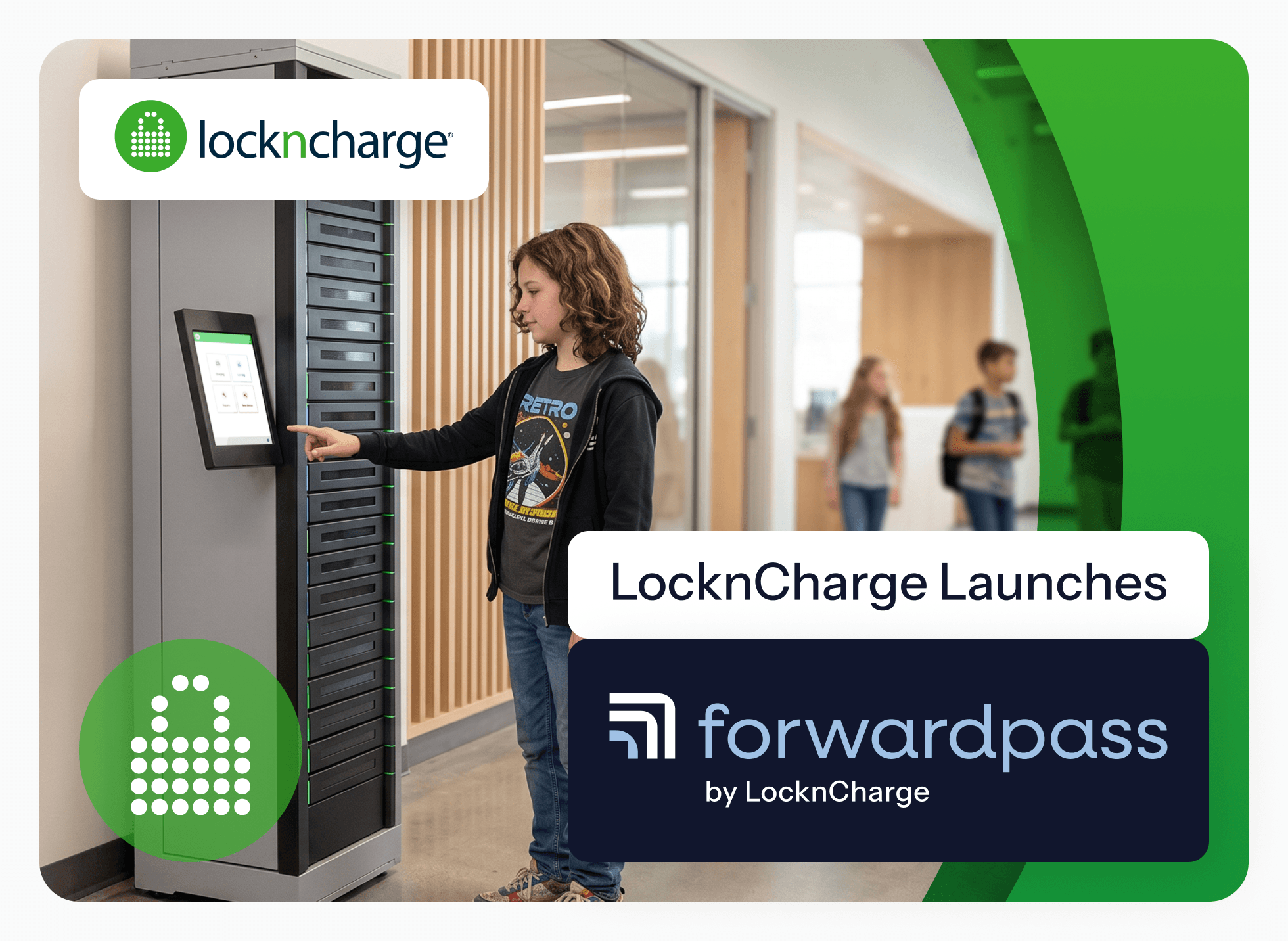
- Self-service access with FUYL Kiosk. A built-in iPad interface lets users check out, return, or report devices without IT involvement.
- Centralized control via FUYL Portal. Admins manage bays, users, alerts, and workflows through a secure cloud dashboard.
- Customizable workflows. Preconfigured flows for charging, repairs, deployments, and loaners can be adapted to each site, role, or policy.
- Scalable hardware options. Choose from 5, 8, 15, or 23-bay configurations to match space, device types, and storage requirements.
- Secure user authentication. Supports SSO, barcode, QR code, or username/password login directly at the locker.
- Built-in integrations. Works with Microsoft Azure, Freshservice, and asset management platforms to automate device ticketing.
- Full-service support. Includes expert onboarding, dedicated customer support, and access to a detailed knowledge base.
- Built for real-world use. A rugged steel frame, passive ventilation, mobile base, and versatile mounting options support deployment in varied environments.
How organizations use LocknCharge smart lockers
Here are several examples of how organizations rely on LocknCharge smart charging lockers to address daily operational challenges:
- Solving day-to-day challenges of 1:1 device programs. Our smart lockers for schools allow students to charge devices and access loaners when their own are lost, stolen, or broken, without repeated requests for IT assistance.
- Improving operational efficiency in hybrid workplaces and shift work. Teams pick up and return devices without IT involvement, which supports smooth shift changes and reduces downtime during handovers.
- Enhancing patient experience through structured device handoffs. LocknCharge healthcare smart lockers give nurses and clinical teams quick, secure access to assigned equipment, removing administrative bottlenecks and cutting the time spent tracking down devices.
Customers report spending 80% less time on device management — equivalent to 360 IT hours saved annually — due to automation and self-service access.
These smart locker benefits often translate into tens of thousands of dollars in labor savings each year, along with better uptime and easier routines for students, employees, and frontline staff.
Key takeaways
- Clarifying your use cases, users, and device workflows is the most important step when choosing smart lockers.
- Prioritize intelligent capabilities such as automation, audit logs, and cloud management alongside secure storage.
- Evaluate hardware durability, charging options, software compatibility, and long-term scalability to avoid costly constraints later.
- A pilot program helps verify real-world performance and confirms vendor support before moving to a full rollout.
To understand how LocknCharge can strengthen your device management strategy, request a demo and speak with our team about your specific smart locker requirements.
Author

.png)